
A swimming pool in the yard can be very dangerous for children. If possible, do not put a swimming pool in your yard until your children are older than 5 years. If you already have a pool, protect your children from drowning by doing the following:
-
Never leave your children alone in or near the pool, even for a moment.
-
You must put up a fence to separate your house from the pool. Most young children who drown in pools wander out of the house and fall into the pool. Install a fence at least 4 feet high around all 4 sides of the pool. This fence will completely separate the pool from the house and play area of the yard. Use gates that self-close and self-latch, with latches higher than your children’s reach.
-
A power safety cover that meets the standards of the American Society for Testing and Materials (ASTM) adds to the protection of your children but should not be used in place of the fence between your house and the pool. Even fencing around your pool and using a power safety cover will not prevent all drownings.
-
Keep rescue equipment (such as a shepherd’s hook or life preserver) and a telephone by the pool.
-
Do not let your child use air-filled “swimming aids” because they are not a substitute for approved life vests and can be dangerous.
-
Anyone watching young children around a pool should learn CPR and be able to rescue a child if needed. Stay within an arm’s length of your child.
-
Remove all toys from the pool after use so children aren’t tempted to reach for them.
-
After the children are done swimming, secure the pool so they can’t get back into it.
Remember, teaching your child how to swim DOES NOT mean your child is safe in water.
Diving Lessons Learn to Swim Swimming Lessons Teach Baby to Swim



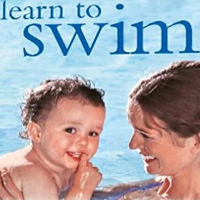
 Water makes us very afraid when we know how easily a baby could drown. Today we are going to tell you how to teach your baby to swim from when he is very small. They will start to have confidence in the water and you will feel much more secure and calm.
 Forget the floats. If you bought them to make them feel safer in the water, the experts do not recommend them. Not only can it give them a false sense of security, but they will also adopt an incorrect way of staying afloat, as it makes them take a vertical position in the water when they need to be able to stand horizontally. If you are already used to swimming with them, it will be difficult to take them off. If you want your child to learn to swim more easily, try these water games:
