Holiday Retreats


Hélène van den Broek

I am Hélène and this is my dog Chacho. I left Holland, to start a new life on La Palma.

I love to be outdoor and coach 50+ active people especially woman. The coaching will be 1:1 and based on the activity they personally like.

For example stargazing on the Mountain, cycling, walking, visit special places, making music with locals etc.


Surfing Holidays

Ori Surf El Medano

Tenerife Surfing Holiday

Private Surfing for Beginners in Tenerife

Personalized Surf lessons no matter age, gender, size or fitness. Get your private surf lesson with tips and a lot of fun. Surfing equipment included. Minimum 2 participants. Price 65€ per person.

Surfing with Boat Stay

Tenerife Surfing Holiday

Join us in Tenerife for your liveaboard boat holiday. We will liase with your recommended surfing instructors  to ensure your holiday meets your expectations, whether that’s surfing for the whole group, a more relaxed pace with Pitch n Putt for the family or maybe a mix and match holiday with diving, golfing, fishing, riding, walking – it’s all down to you with affordable options living aboard our private yacht.

Sample Prices with 7 day boat stay


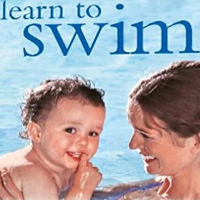
Learn to Swim

Learn to Swim – whatever your age

As many people learn when they make the decision to learn to swim, almost all of the lessons available cater for children.

If you are lucky, you will find a learn-to-swim program at your local pool but it’s likely you will have to wait a long time for a place and in our experience it is unlikely you will have learned to swim a year after starting, that’s if you manage to learn at all!  Read what we have to say about public pools and learn-to-swim classes under our private lessons page.

Many people would like to learn to swim but fear they are the only ones with the sort of problems they have.  Frankly men are the worst for this (sorry for being sexist).  Trust me, you’re far from being alone and not learning to swim because you don’t want to feel a fool while you are learning or because you think you are too old is a real shame and so unnecessary.

We have taught so many people to swim that started out being embarrassed, fearful or simply disbelieving that we almost know what you are going to say when you walk through the door.  Just trust us when we say that whatever is going through your mind, others have gone before you thinking exactly the same and they DID learn to swim.

If you’ve made the decision to learn to swim, or even if you are simply just thinking about it, drop us a line and tells your fears or concerns, or what you would like to achieve, and let us tell you how we can help you learn to swim.

Do you feel that only children can learn to swim?  Do the adult swimming lessons at your local pool leave you cold?  Maybe you been there – done that – still can’t swim.  Maybe you can’t even pluck up the courage to think about it?

Let me tell you my story.

Above is me behind the camera, so sad watching hubby swim when I’m too frightened to even go close.  At 45 I got ME (chronic fatigue syndrome).  At 48, having been so terrified of water all my life – I wouldn’t use the shower in case water went in my face – I decided I was fed up of being a victim and I would learn to swim.

Below is me, age 54, in Egypt the day I qualified as an Open Water Scuba diver.  In between I learned to swim, qualified as an instructor, took a life guarding qualification, taught many many people to get over their own phobias and learn to swim, and finally I learn to dive.

I tried to learn to swim at my local pool and frankly was horrified.  For almost 3 months I went and steadfastly refused to put my face in the water or take my feet off the bottom.  I scoured the net looking for ‘learn to swim’ books that would teach me how to swim without putting my face in the water.  Needless to say – there aren’t any.  It was a long time before I made any progress during which time I saw the vast majority of adult swimmers give up along the way.  Eventually I met Irene who shared my fears and phobias and also had decided to learn (she’s even older than me <grin>).  Together we found TI swimming which teaches balance in the water and altogether different techniques to ASA swimming.

Long story short, Irene and I qualified as ASA instructors then took the best of all we had learned to put together our own ‘Learn to Swim’ methods. These we adapt for each and every student to suit their needs and swimming phobias.  We also address the fact that adult swimming/learning is or should be, very different to the way children learn to swim and also that every adult learns in a different way and has different challenges in life.

Finally, this is me below, diving in the Red Sea.  Take heart – you CAN learn to swim as an adult.

Residential Swimming Lessons

Our private pool is small and inviting and everyone that comes to us for residential swimming lessons tells us they wish they hadn’t wasted so much time, in some cases many years, trying to learn to swim the hard way!

Being residential means that once you have arrived, unpacked and settled in, you can concentrate totally on the task ahead, learning to swim, without worrying about travelling back and forth or forgetting what you learned last lesson because there has been a week or more in between.

When we say residential we mean just that.  We don’t put you up in a local B&B as many do, expecting you to drive back and forth.  Nor do we expect you to share with anyone unless you bring your partner.  The residential accommodation is private, self contained and next to the private pool.

You can cook for yourself or just chill with a glass of wine and order a takeaway, maybe visit the local pub – whatever you style, you will never regret taking residential swimming lessons with us.

Toddler Drowning

Toddler drowning in domestic swimming pools

Australia

Aims To identify how toddlers who drowned gained access to private swimming pools; to recommend preventive strategies to reduce the incidence of toddler drowning and near drowning.

Method The study reviewed critically all completed investigations into the drowning deaths of toddlers aged 1–4 years reported to the state coroner (n=33) as a result of unintentional submersion incidents in domestic swimming pools in Victoria, Australia,from 1 January 1992 to 31 December 1997.

Results   There was a predominance of 1 year olds, and boys.Forty six per cent of the children drowned in the three summer months. The majority of pools were in-ground; most were located on the child’s home property. Over half the pools lacked fencing of any kind; of those that did have fences, only three appear to have met Australian standards.

Conclusions  More than half of the children studied drowned in unfenced pools and spas. In not one case did a child gain unaided access to a pool fitted with a fully functional gate and fence that met the Australian standard. Where children gained access to fenced pools, the majority did so via faulty or inadequate gates, or through gates that were propped open. This finding highlights the need for pool owners to install Australian standard approved fences and gates, and to maintain existing fences and gates regularly. Door locks and supervision were inadequate primary prevention strategies.


Bilateral Breathing

Should you Breathe to Both Sides?

One of the most common wonders of the swimming world is, should you use alternate-side, or bilateral breathing?

Throughout my swimming career, I had always breathed to my right side only until a year ago. Why? Because breathing on my left side felt awkward and uncomfortable! This is the reason why most swimmers will breathe only on one side.

Last year I had an experience that made me change my ways. I was getting a massage and my therapist noted that my left lat muscles (back) were much more developed than my right. Putting two and two together, I realized that years of right side only breathing in the pool had caused me to use these muscles on my left side far more than my right as I was balancing with my left arm while sucking air into my lungs!

The answer to the question is yes, you should use bilateral breathing, if you’re not already. The main reason is that it will balance out your stroke (as well as create symmetry in your back musculature!). The problem with breathing to one side only is that it can make your stroke lopsided. In a one-hour workout, you may roll to your breathing side 1,000 times. A lopsided stroke can become permanent in a hurry after practicing this for a while!

The benefits to breathing nearly as often to one side as the other are that using your “weak” side more frequently will help your stroke overall, and you’ll lose your “blind” side. If you are an open water swimmer, the later benefit will help you check for landmarks, avoid chop, or keep another rough swimmer from splashing water in your face (or punching you in the nose!) as you breathe.

The way to obtain these benefits is to practice bilateral breathing as much as possible. Often in my evening group I will have swimmers breathe every 3 or 5 strokes as part of a drill or warm down. But by no means should this practice be limited to drill sets or long warm downs! It will feel awkward at first, sure. But the awkwardness is easier to deal with than you may think. Regular practice of rolling to both sides to breathe will remedy this before you know it.

Some tips on how to practice bilateral breathing while keeping it interesting:

1. Breathe to your right side on one length and to your left on the next. That way you get the oxygen you need but still develop a symmetrical stroke. 2. Breathe to your weaker side on warm-ups, warm-downs, and slow swimming sets. 3. Experiment with 3 left, 3 right or 4 left, 4 right until you find a comfortable pattern

Keep the goal in mind each week of breathing about the same amount to one side as the other over the course of any week of swimming. Most of all, enjoy your swim and don’t get too hung up on being exact!


Diving Lessons Learn to Swim Swimming Lessons Teach Baby to Swim


Winded and Weary?

Winded and Weary? It’s Time To Update Your Stroke

When the whistle blows on Memorial Day for the first adult swim of the season, I’m in the pool. All the pleasures of a summer swim — the near-weightless slip through cool water, the wavering patterns of sunlight on the pool floor, the calming silence below the surface — return.

For a few lengths. Then I recall an unfortunate defect in this pool: There seems to be a peculiar shortage of oxygen in its vicinity. I keep swimming, but the lovely silence under water is now punctuated by my gasps above it. Then I remember that this pool is filled with particularly dense water (could it be all that lead in the Washington water supply?), which surely explains why my arm muscles ache and my kick is tapering to nothing. Then the final problem emerges: The distance from one end to other gets greater with every length. I decide I’d better get out before I find myself trying to swim to infinity.

The story would be the same this year, except, inspired by yet another article about how good swimming is for you, this winter I decided to look a little further into my swimming problems.

What I find is that I’m not alone in having trouble swimming easily. A flurry of books and videotapes aimed at adults who want to learn to swim better has recently been released. This spring, for the first time in 12 years, the American Red Cross revised what has been the bible of swimming instruction, its swimming and diving manual, along with its instructional video.

The fault, I now learn, lies not in the pool, but in the fact that many of us learned to swim too long ago. Swimming techniques and instruction methods have changed dramatically in recent years. So, if you would rather be swimming in the pool than lounging by the side of it, take heart. Updating your technique can make swimming not only easier, but, I can attest, downright pleasant.

The Water’s Fine There is no better fitness activity than swimming, said Steve Jordan, educator for the National Academy of Sports Medicine. It is one of the best cardiovascular activities and it conditions most of the large muscle groups. Best of all, it puts almost no pressure on the joints, making it a sport for life. Because the water supports most of a swimmer’s weight, it’s a particularly good activity for overweight people. And since water is dense, moving through it takes a lot of energy, which means burning calories at a high rate.

It’s also difficult to injure yourself swimming. Katie Moore, president-elect of the American Physical Therapy Association, said muscle strains resulting from swimming are almost unheard of. The resistance of water — in essence, its weight — is a function of how hard you push or pull it. You simply can’t move more water faster than you have strength for.

Shoulder rotator cuff injuries occur occasionally, noted Jeff Berg, an orthopedist in Reston and team physician for the Washington Redskins. But these are the result of poor technique. Berg frequently sends players with knee injuries to the pool to maintain conditioning while resting the damaged joint.

Of course, these benefits accrue only if you swim regularly. According to the American College of Sports Medicine, to get the aerobic benefits you need to swim at least three times a week for about 30 minutes at a time.

So, how do you get good enough to swim comfortably for that long, instead of clinging to the wall, sucking air after five minutes?

If you learned to swim before 1980, you were probably taught to swim by an instructor certified in the 1938 American Red Cross method. The group’s manual for swimming instruction, which was not significantly revised for four decades, taught beginning freestyle swimmers to “thrash” their legs up and down and to move their arms in a “windmill type of two-beat stroke.”

More-advanced swimmers were instructed to kick like “pedaling a bicycle of very low gear” and to “fling the forearm beyond the head” to prepare to take a stroke.

Body roll was anathema. The pulling hand was cupped and pulled under water to a vertical position. Swimmers were advised to keep the waterline just above the eyebrows.

Mechanical Improvements

Instruction began to change in the 1960s, starting at the competitive level, when James “Doc” Counsilman introduced the study of biomechanics to swimming.

Counsilman, who coached Indiana University swimmers and the U.S. Olympic men’s teams in 1964 and 1976, pioneered the use of an underwater motion camera, strain gauge devices to measure a swimmer’s propulsion and other tools to collect efficiency and effectiveness data.

Counsilman, who died this year, discovered that the freestyle kick is not propulsive. Use it gently and with as few as two beats per arm cycle, he advised, simply to keep the hips from sinking and for balance. Body roll, from the hips through the shoulders and head, makes breathing easier and is essential for avoiding rotator cuff strains.

After the arm finishes a stroke, it should be lifted out of the water with the elbow held high and close to the body. (No forearm-flinging, please!) The pulling hand is most effective in a relaxed position with fingers close to each other but not glued together. The pulling arm should be bent and pass under, not straight alongside, the body.

Counsilman’s 1968 book, “The Science of Swimming,” brought these and other concepts to a more general audience. In 1979 the Red Cross began to modify the techniques it taught to instructors.

Over the next 10 years, successive versions of the Red Cross manual gradually incorporated the changes swimming coaches were using. The current manual, videos and DVDs — have been prepared with the help of USA Swimming, the governing body for competitive swimming in the United States. The YMCA teaches similar techniques; its materials have been vetted by the American Swimming Coaches Association. Many of today’s instructors have been trained through Red Cross or the YMCA.

The changes, such as slowing your kick or recovering your arm elbow-up and close to your body, may seem small, but incorporating them into your swimming can make an enormous difference. That’s because swimming, like golf and skiing, is a technique sport.

On land, people expend about the same amount of energy whether they run or walk a mile. But exercise in the water is different, said Joel Stager, professor of kinesiology at Indiana University and director of the university’s Counsilman Center for the Science of Swimming. Because water is a thousand times denser than air, “a swimmer with poor technique expends three or four times the energy to cover the same distance. That means that a slight woman with a well-honed stroke that barely ripples the surface can outdistance the muscular fellow kicking and beating the water to a froth.”

Technique also trumps a lack of natural buoyancy, in case you’re a “sinker” who thinks you’re fated by your build to struggle in the water. While it is true that some people naturally float more easily than others (it’s one benefit of a little extra body fat), many lean-bodied competitive swimmers do not float well.

The bottom line is that if you learned to swim before 1980 and haven’t had a lesson since then, it’s a good bet your technique needs a tuneup — or a revamping.

Different Strokes

There are three major approaches to improving your swimming technique: lessons (either group or private), stroke clinics and Masters swimming.

If you are uneasy in the water and struggle to swim more than a length or two, group or private lessons may be the best approach. Donnie Shaw, aquatics director at the National Capital YMCA in Washington, reports that for many adults, “overcoming fear and learning to relax in the water is a real challenge. That can take some time.”

One common swimming error that is easy to fix and makes a world of difference, he adds, is remembering to always exhale completely while your face is under water.

If you can swim several consecutive laps without a sense of panic, a stroke clinic can fine-tune your technique be a good solution. Typically, such clinics meet once a week for six to eight weeks.

If you can swim about 30 laps, even if slowly and with rests, and want to refine your skills, a Masters swimming club may be for you. United States Masters Swimming is a national organization whose 43,000 members are associated with more than 450 clubs. Lap swimmers with a wide range of abilities join in order to swim with others at a set time and place. Some have highly structured workouts and active poolside coaching; others are informal and camaraderie is the most important draw.

I stumbled across a fourth option, a choice for do-it-yourselfers, offered by a company called Total Immersion.

Total Immersion, founded in 1989 by Terry Laughlin, who has been coaching swimming professionally for 32 years, is aimed primarily at adults who already swim but want to do it more easily. Rather than fine-tuning a swimmer’s strokes, the method develops an entirely new swimming technique.

The program is taught in two ways: through two-day clinics, several of which are held most weekends across the country, or via a video/DVD. Laughlin reports that in 2003 about 2,000 people took Total Immersion clinics and more than 30,000 bought instructional books, videos and DVDs. I opted for the DVD and joined an indoor swim club.

According to Laughlin, the first step adult swimmers need to take is to forget everything they have learned about swimming. Swimming “is not about using your hands to push water toward your feet,” but about slipping through the water with as little drag as possible.

To achieve streamlining, Total Immersion swimmers keep the head just below the surface of the water, which lifts the hips and legs and ensures that the swimmer stays parallel to the surface, offering as narrow a profile as possible to water in front of the swimmer.

Swimmers also reduce drag by performing most of the stroke cycle on their sides, switching quickly from one side to the other as the recovering hand enters the water. The switch, Laughlin asserts, also produces torque for additional propulsion.

In addition, Total Immersion-trained swimmers keep one arm extended in front of them all the time to lengthen the body’s profile, which, like a sleek sailboat hull, encounters less water resistance. That constant arm extension leads to what is called front-quadrant swimming, in which the extended arm doesn’t start to pull until the recovering arm is in front of the head and about to enter the water.

Laughlin’s method relies on a series of 14 drills. Each one adds a small, incremental skill until all the elements of the stroke are in place. The emphasis is on balance, fluidity and careful perfection of motions rather than on building strength by powering through laps.

The method worked beautifully for me: I can now swim freestyle for 30 minutes, and with pleasure. The drills were easy to do, and I enjoyed mastering the progression. The sequential nature of the method motivated me to get back to the pool day after day. But it took me several weeks to get a complete stroke again. Total Immersion is not a quick tune-up.

Although I’ve become a fan of the method, I have no doubt I would have improved with a stroke clinic or by getting coaching at a Masters club.

Many of Total Immersion’s techniques — as opposed to its instruction method — are similar to those of the YMCA and the Red Cross. Some of the differences are merely matters of degree: how far to roll the body or how deep to hold the head.

The feedback of an instructor has great value. In fact, at the end of the tutorial I found a Total Immersion-trained instructor to give me some one-on-one coaching.

One thing that all the experts agree on is that you need patience to make a new technique your own. Steve Jordan explained: “To create a new habit on a clean slate takes a few repetitions. To replace an old habit with a new one sometimes takes many hundreds of repetitions.”

But if you’d like to do more than sit by the side of the pool this summer, it’s worth it.

Ruth Kassinger is a Washington area freelance writer.


Diving Lessons Learn to Swim Swimming Lessons Teach Baby to Swim


Preparing your Child for Swimming

If you have ever seen a baby introduced to swimming, then you will know that being in water is natural and instinctive to human beings. However, it’s very easy to become fearful about water, and rightly so. A child can drown in 20 seconds. So making sure that your child can swim is not only crucial to help keep them safe, but is something you can have fun with. So read on to find out how to build confidence in your child, to prepare them for lessons with a qualified instructor.

The Correct Age for Swimming Lessons

Most babies will take to water very easily, and have a natural reflex to hold their breath under water before around six months. To actually introduce your child to formal lessons or teach swimming strokes, however, your child will need to be at least three years old.

First Steps for Children

To prepare your child for lessons and help them feel comfortable in the water, the main thing to do initially is to get your child used to the water. Never just take your child to a pool, take them out of their depth, let go and tell them to swim. Your child will not only panic, but be in danger.

You can try these simple techniques to help them feel happy in the pool:

  • Hold securely onto your child and glide them through the water
  • Play a splashing game – so they get used to water on their face and in their eyes
  • Practice blowing bubbles in the water, this will teach them importance of not breathing water in, and encourage them to move onto the next step of putting their face in the water.
  • Once they are happy to put their face in the water, you can encourage them to open their eyes. If it stings and they don’t like it, then add goggles to their swimming kit. Helping your child to feel happy with water on their face is a crucial part of taking the fear out of swimming.
  • Sit on the side with your child and show them how to move their legs in the water pointing their toes.
  • Never force your child to go further than they want to. Always make it fun, be positive and stay patient. Not all children adapt to water at the same pace…some are true water babies whilst others will struggle.
  • Always praise your child for their achievements in the pool.

Choosing Swimming Lessons

Once your child is happy to be in the water, then you can research swimming lessons.

You should always feel happy about the instruction your child receives, so always ask these questions first.

  • Will the instructor be in the pool with the children?
  • How many children are in the group? More than ten children to one instructor isn’t advisable.
  • Is my child assessed first?
  • Is the instructor qualified to ASA/UKCC Level 2 and CRB checked? They should also hold a current Lifesavers National Pool Lifeguard qualification/equivalent rescue qualification.

If you’re unsure, check with ASA, who regulate swimming tutors for more advice.

Swimming Pool Safety for Children

A swimming pool in the yard can be very dangerous for children. If possible, do not put a swimming pool in your yard until your children are older than 5 years. If you already have a pool, protect your children from drowning by doing the following:

  • Never leave your children alone in or near the pool, even for a moment.

  • You must put up a fence to separate your house from the pool. Most young children who drown in pools wander out of the house and fall into the pool. Install a fence at least 4 feet high around all 4 sides of the pool. This fence will completely separate the pool from the house and play area of the yard. Use gates that self-close and self-latch, with latches higher than your children’s reach.

  • A power safety cover that meets the standards of the American Society for Testing and Materials (ASTM) adds to the protection of your children but should not be used in place of the fence between your house and the pool. Even fencing around your pool and using a power safety cover will not prevent all drownings.

  • Keep rescue equipment (such as a shepherd’s hook or life preserver) and a telephone by the pool.

  • Do not let your child use air-filled “swimming aids” because they are not a substitute for approved life vests and can be dangerous.

  • Anyone watching young children around a pool should learn CPR and be able to rescue a child if needed. Stay within an arm’s length of your child.

  • Remove all toys from the pool after use so children aren’t tempted to reach for them.

  • After the children are done swimming, secure the pool so they can’t get back into it.

Remember, teaching your child how to swim DOES NOT mean your child is safe in water.


Diving Lessons Learn to Swim Swimming Lessons Teach Baby to Swim