Swimming Instructor one-to-one lessons

To talk to us about  Swimming Instruction please contact us via our contact form.

Swimming Instruction

I am 72 years old and was terrified of water until  into my forties.  I am a teacher by profession computing and business studies and I semi-retired a few years ago due to illness.  With time on my hands I finally decided to beat my fear of water and now thoroughly regret not having done it a long time ago.

swimming instructor uk<————-   This is me on holiday in Tenerife 2003.

Having taken lessons at my local pool I went on to do a specialised swimming course and then took my first teachers certificate after specialist swimming instruction.

My teaching career was quite varied.  Having had a fairly traditional 20 year career in computing (programming systems analysis project management consultancy) I switched to teaching first lecturing at Cornwall College to adults and later giving instruction to Special Needs teenagers in Birmingham. From this came a strong belief that most people can achieve whatever they set out to achieve provided they have the proper support and encouragement swimming instruction is no different to anything else in this respect.

Here is Immy’s brother Luke better known as the Bubble.  He’s next for the pool!

swimming instruction from Swim With Us

You might also like to visit Learn-to-Swim-Easy and read Irene’s story.  Irene and I have much the same philosophy and outlook on swimming and you could also approach her for swimming instruction.  Swimming Instruction is also available from Steve at Ergoswim.

Please note I do not endorse any other swimming instructor or organisation.  Please satisfy yourself as the suitability of any swimming instructor or swimming teacher that you choose to employ.
Learn to Swim Award

ROCHESTER GIRL CHOSEN FROM THOUSANDS TO WIN SWIMMING AWARD.

Zoe Bartlett is making a splash after earning a top award to mark her outstanding achievement in the water.

The seven year old from Rochester, had a major fear of water but this has not stopped her learning to swim.

Now her courage and perseverance have paid off and she is riding on the crest of a wave after she was presented with a Southern Water Learn to Swim Achiever of the Year award.

The successful youngster was one of fifty winners from amongst the 35,000 children taking part across the region. The awards are given to children who have shown great courage in overcoming particular difficulties or for their exceptional performance.

Zoe’s swimming instructor at Strood Sports Centre, Maureen Welsh said: “Zoe was extremely frightened of the water and was terrified of getting her face wet. She would not join in with the rest of the class, but fortunately she never gave up. With great courage and perseverance she has now overcome her fears and can swim and go under water. She is a very worthy winner of the award.”

Zoe was treated to a visit by the Learn to Swim scheme mascot Ollie the Otter, who dropped in to help her celebrate her success.

Nigel Smetham, Southern Water’s Water Manager presented the youngster with a bag of goodies, which included a sports watch, at a special ceremony at Maidstone Leisure Centre.

Mr Smetham said: “This is a tremendous occasion for these children. They have proved themselves in many different ways and made enormous achievements on the Learn to Swim scheme.

To win these awards is extremely significant because the youngsters have been selected from 35,000 children who were taught on the scheme last year.

We are pleased to be able to contribute to the community by helping children learn a very valuable life skill, as well as enabling them to reach their fullest potential.”

The scheme, now in its tenth year, teaches children from 4-12 year-olds and is sponsored by Southern Water. It is run in consultation with the Amateur Swimming Association (ASA).


Diving Lessons Learn to Swim Swimming Lessons Teach Baby to Swim


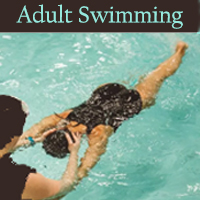
Adult Swimming Lessons

Learn to Swim for Adults

Do you feel that only children can learn to swim?  Do the adult swimming lessons at your local pool leave you cold?  Maybe you been there – done that – still can’t swim.  Maybe you can’t even pluck up the courage to think about it?  My journey as an adult learning to swim.

Almost all adults reading this page will have failed to learned to swim as a child and will broadly fall into 2 categories:

  • Adults who never had the opportunity at school
  • Adults who never got the hang of it at school

If you are reading this now I am assuming you are considering taking adult swimming lessons, and like most other adults reading this page you will have concerns.  Let me just list a few of the comments we get from would-be adult swimmers over and over and over again.

  • I’m the odd one out.  Everyone else can swim.
  • My legs sink.  Swimming lessons just don’t work for me.
  • I just can’t put my face in the water.
  • If I take adult swimming lessons, will I have to go in the deep end?  Panic!!!
  • I’m not just an adult – I’m way too old.
  • Adult swimming lessons for men are embarrassing.

The list is endless but largely there are many many reasons why people manage to talk themselves out of taking adult swimming lessons.  As of today, we haven’t met one single person that can’t learn to swim as an adult no matter what their age or perceived problems.

So if you found this page searching for adult swimming lessons and you’ve read this far, why not contact us and have a chat about you adult lessons.

Sauvage swimwear Skimp Couture is here to bring you some of the best and hottest swim suits and beach accessories from new and established designers. Check out a wide selection of sexy womens and mens beachwear, designer swimwear and accessories.

Finally an apology for the excessive use of the words adult swimming lessons but that’s what the net likes and we do want to find us every time you search for ‘ADULT SWIMMING LESSONS‘.

Backstroke Ban

Swimming pool bans backstroke

A local council has banned it’s swimmers from doing backstroke in the pool as it fears they could injure themselves if they collide. Swimmers at the Daisyfield pool in Blackburn  have been told they can do only forward strokes during busy periods when the pool is divided into lanes, officials said. “This is not about threats of legal action,” said Kate Hollern, of Blackburn and Darwen Council responsible for culture, leisure and sport. “We are simply limiting the times when people can swim backstroke to prevent dangerous collisions. “We would expect that people would be concerned for their own safety as well as that of others so we are being proactive in introducing these rules.” She said the new rules complied with guidelines issued by the national Institute of Sport and Recreation Management, and were “designed be inclusive to ensure that all people can use our facilities in a safe way”.    


Diving Lessons Learn to Swim Swimming Lessons Teach Baby to Swim


Bilateral Breathing

Should you Breathe to Both Sides?

One of the most common wonders of the swimming world is, should you use alternate-side, or bilateral breathing?

Throughout my swimming career, I had always breathed to my right side only until a year ago. Why? Because breathing on my left side felt awkward and uncomfortable! This is the reason why most swimmers will breathe only on one side.

Last year I had an experience that made me change my ways. I was getting a massage and my therapist noted that my left lat muscles (back) were much more developed than my right. Putting two and two together, I realized that years of right side only breathing in the pool had caused me to use these muscles on my left side far more than my right as I was balancing with my left arm while sucking air into my lungs!

The answer to the question is yes, you should use bilateral breathing, if you’re not already. The main reason is that it will balance out your stroke (as well as create symmetry in your back musculature!). The problem with breathing to one side only is that it can make your stroke lopsided. In a one-hour workout, you may roll to your breathing side 1,000 times. A lopsided stroke can become permanent in a hurry after practicing this for a while!

The benefits to breathing nearly as often to one side as the other are that using your “weak” side more frequently will help your stroke overall, and you’ll lose your “blind” side. If you are an open water swimmer, the later benefit will help you check for landmarks, avoid chop, or keep another rough swimmer from splashing water in your face (or punching you in the nose!) as you breathe.

The way to obtain these benefits is to practice bilateral breathing as much as possible. Often in my evening group I will have swimmers breathe every 3 or 5 strokes as part of a drill or warm down. But by no means should this practice be limited to drill sets or long warm downs! It will feel awkward at first, sure. But the awkwardness is easier to deal with than you may think. Regular practice of rolling to both sides to breathe will remedy this before you know it.

Some tips on how to practice bilateral breathing while keeping it interesting:

1. Breathe to your right side on one length and to your left on the next. That way you get the oxygen you need but still develop a symmetrical stroke. 2. Breathe to your weaker side on warm-ups, warm-downs, and slow swimming sets. 3. Experiment with 3 left, 3 right or 4 left, 4 right until you find a comfortable pattern

Keep the goal in mind each week of breathing about the same amount to one side as the other over the course of any week of swimming. Most of all, enjoy your swim and don’t get too hung up on being exact!


Diving Lessons Learn to Swim Swimming Lessons Teach Baby to Swim


Private Swimming Lessons

Why are private swimming lessons better than public pool lessons?

Let’s just look at the cost element to begin with.  You pay £4 per lesson and get 7 lessons per half term. That’s 42 swimming lessons per year costing £126.  You probably spend the same amount again practicing in between plus the cost of getting to and from the pool every week.  So you’ve spent maybe close on £200.  Can you swim a length at the end of that year?  Not one person at our local swimming pool moved up to the intermediate class in less a years lessons.  In the intermediate class the deep end was an terrifying experience with the instructor standing poolside with a long pole for those who got into difficulty which many did.

Is being in a public pool with other people and your instructor on the poolside a good way to learn?  What do you think?

Suppose you paid that amount for private lessons, learning to swim in the comfort of a private pool with your instructor in the water with you?  What would you achieve?  For most people this would get you almost there.  For some, these supportive individually tailored private swimming lessons will be all that’s needed, if you are really water phobic, then you will obviously want more support but you will be amazed at what you can achieve in a small private pool with the right instructor.

Contrast the 2 years at your local swimming pool taking lessons in a class against booking your private lessons today and knowing you can go on your next holiday and be confident in the pool or the sea.

But couldn’t I just have a private swimming lesson at my local pool?

A private lesson at your local pool is always an option but having been there ourselves and spoken to many many people who have found this wasn’t the answer for them, we feel confident in saying this is a somewhat pointless exercise.  You will simply get exactly the same for your private lesson as you did for a lesson shared with other people and it will cost you about 4 times the price for half the time.  Your swimming instructor will still be poolside shouting her instructions to you and usually your so-called ‘private swimming lesson’ will be in a pool full of other people.  Just because you have the instructions undivided attention for half an hour, in our opinion doesn’t justify calling it a ‘private lesson’.  What you gain from being the only student, you can lose by being fearful of other swimmers splashing and making noise during your ‘private swimming lesson’.  Not so private after all?

What proportion of adults fail to learn to swim because they don’t have private lessons?

Irene and Gay speak from personal experience.  We continued to go to our local pool for ‘lessons’ for about 3 years after we learned to swim simply because we enjoyed swimming.  Most of our skills came from taking swimming courses with TI and studying other methods such as Shaw and Alexander.  We also researched a great deal about fear and phobias and spent a lot of our free time in the pool helping each other correct our technique.

We didn’t learn a lot at the local classes and the ‘advanced’ class wasn’t all that advanced!  What we did learn was that the vast majority of people fell by the wayside.  Some had private swimming lessons, paying £22 an hour to be coached from the poolside in a public pool full of other swimmers.  As I mentioned above, not my idea of a private swimming lesson.

So how many succeeded without having private lessons in a private pool?  VERY VERY FEW!!! and that includes those that had some individual lessons in the public pool.

Conclusion?

Private swimming lessons in a private pool with your instructor in the pool with you (and only you!) is the way forward.  Of course, just because an instructor offers private lessons, doesn’t necessarily mean they have what it takes to teach you, but we like to think we stand out above most others and our testimonials prove that.

So what are you waiting for?  Contact us now to chat about your fears and phobias and how we can tailor YOUR private swimming lessons.


Heidi’s Channel Swim

A COALVILLE woman has made a splash raising money for a spinal injury charity.

Heidi Spiller, 35, has now finished swimming the length of the English Channel a massive 1,408 lengths of Hermitage Leisure Centre’s swimming pool.

All of the money raised around £1,030 will now go to Aspire, the Association for Spinal Injury Research Rehabilitation and Reintegration.

Heidi decided to dive-in and help the charity after overcoming her fear of the deep-end earlier this year.

She said: “Just before the summer holidays I swam 64 lengths, which is a mile, and I felt like I wanted something more to aspire to.

“When I went back to the leisure centre I saw the information for the Aspire Channel Swim and I thought I could actually exercise, lose weight and do something good for somebody else.”

Every day four people in the UK are told they will never walk again.

Aspire works with these people to offer practical support and innovation from the time of their injury for the rest of their lives.

The charity works towards reintegration by creating an environment where the barriers that divide able-bodied and disabled people are removed.

Having completed the task, Heidi said: “I feel fantastic – I’m jumping for joy.

“People are asking me if I’m going to swim back now that I’ve swum to France, but I’ll give it a rest for now!”


Diving Lessons Learn to Swim Swimming Lessons Teach Baby to Swim


Swimming and Epilepsy

Courtesy of Epilepsy Action

Swimming is an excellent way to keep in shape yet many people are frightened in case they or their children have a seizure in the water. This leaflet aims to show that with a few sensible precautions people with epilepsy can enjoy all the benefits of swimming quite safely.

Swimming is often a very sociable activity. Children for example may feel left out if they are barred from swimming just because of epilepsy while all their classmates are playing or learning to swim in the pool. Such segregation increases the feeling of being ‘different’ or an outsider. Other children may then react unfavourably and the child with epilepsy can feel rejected.

Everyone should learn how to swim especially children with epilepsy – it helps with self-confidence with social skills and relationships and most importantly it’s fun!

Often those of us with epilepsy may want to swim but are prevented by family friends teachers or swimming pool staff. Other people sometimes imagine the worst and decide on our behalf that it is not worth the risk. If so this page should help calm those fears but for extra reassurance they can telephone the Freephone Helpline on 0808 800 5050.

Research shows that few seizures actually occur in the water. This may be because when a person is enjoyably occupied they are less likely to have a seizure. All sports and pastimes including swimming can help to improve seizure patterns in some people. However it is impossible to be certain that a seizure will not occur so it is essential to follow a few simple safety measures.

Safety first

  • Never swim alone and do not take risks.

  • Make sure there is a qualified life-saver present (perhaps a friend or relative could learn). If there isn’t one swim no deeper than your supervisor’s or companion’s shoulder height.

  • Always tell a person in charge if you have epilepsy.

  • Check that the person in charge or your companion knows what to do if you have a seizure.

  • If you can practice with your companion what to do in the event of a seizure – this will boost your confidence and theirs.

  • Swimming in the sea lakes or very cold water is dangerous – be sensible.

  • If unwell don’t swim.

  • Avoid overcrowded situations.

Good buddies do it together

Those of us with epilepsy can find it embarrassing to be ‘supervised’ especially if we are the only person being watched over. Swimming in pairs is an American idea known as the Buddy System and it is becoming popular in the UK. It is especially useful in swimming classes because it means everyone has a partner taking attention away from the person with epilepsy. It also enables life-saving to be taught in pairs and teaches us all to be aware of other people’s safety.

Once or twice during the session someone blows a whistle and you must be able to touch your partner immediately. If you can’t it means you are too far away from each other and you have ‘lost’. An agreed forfeit may then be paid. If this partnering method cannot be used it may be better for the ‘supervisor’ to stay out of the water in case prompt action is needed. Whichever method is used supervision needs to be discreet.

How to deal with a seizure in the water

Not all people with epilepsy have convulsions. Some may simply go blank for a few seconds (absences) others may make repeated aimless movements for a minute or two (partial seizures). These last two seizure types do not usually require emergency action but care needs to be taken that the person does not sink. When they recover gently ask if they would like to get out of the water. They may not realise what happened or they may feel groggy.

The basic guidelines are:

  1. Do not be afraid the seizure will probably not last long.

  2. From behind hold the swimmer’s head above water.

  3. If possible tow the person to shallow water.

  4. Do not restrict movements or place anything in the mouth.

  5. Once abnormal movement has stopped move the swimmer to dry land.

  6. If water has been swallowed take the usual resuscitation measures.

  7. Place the swimmer on his or her side to recover.

  8. Only call an ambulance if the person goes from one seizure to another without regaining consciousness or if the seizure lasts longer than normal or if there is injury or a lot of water has been swallowed.

  9. If possible recovery should be in a private place.

  10. Stay with the person until they feel better.

Should I ask my doctor before going swimming?

It is a good idea to speak to your doctor first particularly if the epilepsy is largely uncontrolled. Both of you need to take into account the type severity and frequency of the seizures known triggers such as noise stress excitement etc. whether there is any warning before a seizure and what supervision is available.

However if you really want to swim find a safe and suitable way to do it using all the recommendations listed here. Those of us with epilepsy should not allow it to ruin our quality of life and being a non-swimmer is far more dangerous than learning to swim in a safe and supervised environment.

Further advice on epilepsy and swimming is available from Epilepsy Action by using the Email Helpline or if you live in the UK by phoning the Freephone Helpline on 0808 800 5050.


Diving Lessons Learn to Swim Swimming Lessons Teach Baby to Swim


Your Infant’s First Swim

Taking the Plunge – Your Infant’s First Swim

Aaaah, spring! With the last remainder of winter gradually melting into the ground, its easy to let your mind begin to wander to the firsts of summer: that first evening BBQ with friends, that first softball game being played in the park, or that first whiff of freshly-mowed grass.

But before you start day-dreaming about your little one’s first toe dip in a wading pool for swim lessons, consider the following: According to the American Academy of Paediatrics, swim classes may not be a good idea for babies. Research shows that, in children under 3, the risk of infections increases with time spent in swimming pools.

Your child may be more likely develop swimmer’s ear (due to water entering the ear), diarrhoea (due to germs in the water being swallowed), swimmer’s itch, and other rashes. Along with these greater risks, children under 3 who have taken lessons prove to be no stronger as swimmers in later years than their non-lesson counterparts.

Nor could an infant’s tendency to float in water (due to high fat content) be called upon in a life-threatening aquatic situation! So, should you shirk all water activity with your infant, and, on a hot day, ignore the enticing, glistening waters of your local outdoor swimming pool?

The answer is no. As long as you are aware of the risks, and do not expect your little one to develop self-reliant skills in the water, it is perfectly acceptable to use the pool as a place where you can both cool off.

Do keep in mind some common sense advice, however.

– Small children with colds and flus should refrain from water activity. If your child is prone to ear infections, seek the doctor’s approval before he takes the plunge.

– Don’t submerge a baby’s face. Swallowing water can cause water intoxication, a watering down of the blood that produces nausea, weakness, convulsions, and even coma.

– A baby who does not maintain good head control should never be taken into a pool. His head may bob under by accident, so wait until he is stronger.

– Lastly, have fun with your baby, but do not expect to “teach” him swimming skills. Allowing your child to feel comfortable and safe in the water is the first and most important step in his water safety training.


Diving Lessons Learn to Swim Swimming Lessons Teach Baby to Swim