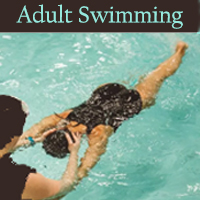
Taking the Plunge

Taking the Plunge One Man’s Journey Into Fear Otherwise Known as a Swimming Pool

Reprinted by kind permission of Outsports.com co-founder Cyd Zeigler

What gay man doesn’t have some kind of trepidation about sports?  Some are afraid of dropping the football when it’s thrown to them and getting laughed at.  Some are timid about joining in on a pick-up basketball game lest someone roll their eyes when they miss a shot.  Others are afraid of jocks in general remembering their years of torment in high school.  Many have simply opted to skip sports all together.

Some people who know me refer to me as a “jock.”  I play football with passion bumping and running catching intercepting and throwing the ball whenever I get the chance.  I play Ultimate Frisbee with reckless abandon:  Send me deep and I’ll come down with every disc you throw me.  Tennis basketball golf – you name it I love it.

Yet I’m afraid of swimming.

I have been since I was 5 years old and drifted too far on my raft on Long Pond got off the raft and immediately sank to the bottom.  I avoid deep water and won’t go near a wave.  I’ve never dived head-first into a pool.  I’ve never once opened my eyes underwater.

All because of my fear of it.  Fear of what? You may ask.  It’s something I’ve asked myself a million times.  Fear of drowning?  Maybe.  Fear of looking bad?  Probably.  Fear of suddenly flailing in the water having to be saved by a lifeguard?  Most definitely.

Sure I’ll don a pair of colorful board shorts with the rest of them head to Laguna Beach and prance around throwing a football or a Frisbee with friends.  But when that football or Frisbee goes into the water I’ll let it go standing there with envy as I watch the other guys having so much fun diving under waves splashing one another as they laugh together.

It was one of those days not long ago that I decided I’d had enough.

About two months ago I was talking to Shamey Cramer a member of West Hollywood Aquatics about trying to swim.

“Come on out to one of our open swims at the pool ” he said.

Uh no.  I’m not going out to the pool for a swim with the West Hollywood Aquatics team to embarrass myself in front of a couple dozen guys who have been swimming all their lives.

As I was saying that to him I realized that I was doing what I accuse other people of doing with sports:  I was being afraid to fail and letting that stop me in my tracks.  So what if they laughed at me?  So what if they got impatient with my lack of ability?

Hmmm . . . better take a couple lessons first.

My biggest question before my series of four private lessons was that age old dilemma that every swimmer goes through at some point in his life:  Speedos or trunks.  You’ve got to remember:  I’d never done laps in a pool before and hadn’t taken a swim lesson since I was five.  All I knew of swimming semi-seriously in a pool was what I saw on television.  After a poll of a dozen friends the verdict was unanimous:  trunks.

So on the first Sunday in March I ventured to the pool where I was to begin my first road to hydrophobia freedom.

It was a disaster.

When we got into the water (on the shallow end of course) the instructor who speaks with a French accent so strong I can’t understand about 40% of what he’s saying says “OK do the breast stroke.”

Do the breast stroke?  I don’t even know what that is.

He looked at me blinked a couple times and did a quick demonstration of what looked like a frog swimming.  The only problem here:  a frog can hold his breath a lot longer than I can.  Trying desperately to come up for air every three seconds I was splashing around sinking quickly then bobbing my head above the surface kicking frantically wondering what have I gotten myself into?

Next up was the backstroke.  Same result:  lots of splashing even more sinking.

It’s a wonder he didn’t burst out into laughter watching me attempt the freestyle:  taking two strokes stopping standing clearing my nose then taking two more strokes stopping coughing taking two more strokes . . . .

At the end of the first lesson he said we were going to try diving.

“I don’t do diving ” I said.  As I said it I looked up to see the 3- and 5-year-olds who would be taking a lesson after me.  They were standing there as though in shock at the edge of the pool watching me.  Good to know I could provide a little humor to someone’s day.

With that we ended lesson #1 of my attempt to remain as afraid of water as humanly possible.

And someone once called me a jock?

Something funny happened on the way to the pool the following week.  A friend told me I should duck my head underwater and just open my eyes.  When I told him I didn’t have goggles he said I didn’t need them to open my eyes.  Then I whipped out the excuse I’ve always used for not being able to open my eyes under water:

“I wear contact lenses.”

“Take them off ” he said.

But but but . . . .   I tried coming up with a good response – to no avail.  As I headed to the pool I started wondering why I was afraid of opening my eyes underwater.  Was I afraid that my eyes would suddenly pop out of my head?  That I would go blind?  That it would hurt?  Hell I play football with a herniated disc in my back – THAT hurts.

At the start of my second lesson I dunked my head underwater and for the first time in my life opened my eyes.  I looked left looked down then popped back up.

“Hey that didn’t hurt ” I said.

“I know ” said the instructor.

I dunked my head under the surface again and opened my eyes.

“It still doesn’t hurt ” I said.

The instructor took a deep breath.  “Let’s start again with breast stroke.”

As I readied to push off from the wall of the pool he added something else:  “this time just relax.”

I took a deep breath and pushed off from the wall.  This time I didn’t sink.  This time I moved through the water.  This time I just breathed.

I only got halfway across the pool before water got in my nose I lose my concentration and came up for air.

“That’s good that’s good ” the instructor said.  “Keep going.”

Back into the water I finished the lap.  My first lap.  Ever.

Over the next couple of weeks we moved on to the backstroke and freestyle.  While I still don’t have the breathing down entirely for the latter I’m now going on my own to do laps at the pool.  Slowly.  With trepidation.  But I’m doing them.

At the end of the last session the instructor said it was time to try diving again.

An openly gay collegiate athlete said in a first-person article on Outsports.com earlier this year “coming out often felt like jumping off a 30-foot cliff into a deep pool of water.”  I thought that was a telling image – except for the fact that I’d probably crash into the water get the wind knocked out of me become disoriented and drown.

This time as I was about to offer my standard response – “I don’t do diving” – I blurted out “OK.”

It was freezing out of the water – in the middle of one of the windstorms that have swept across southern California in the last few months.  I was glad I wasn’t wearing a Speedo.

The instructor showed me how to stand on the edge of the pool with my toes curled for extra push (of course I thought what in hell do you want to push for – I wanted to get to the water as slowly as possible).

By now in the lesson the three- and five- year olds who came after me had arrived and were watching me on the edge of the pool knees bent arms out forward head tucked standing there waiting for someone to push me in.  Seeing them made me laugh as I figured them seeing me made them laugh.  And over I tumbled.

It wasn’t the prettiest entry but it was my first.  By the third dive I got so that it wasn’t hurting my stomach when I crashed into the water.  And by the fifth dive it was actually feeling pretty good.

While I still may have to stop and take a few breaths at every turn and while I sometimes stop mid-lap because water got in my nose I can honestly say I’m no longer afraid to swim.  I’ve even started going to the pool – with other people around – and doing laps.  The “pool snobs” may roll their eyes but now I don’t give a ****.

Plus I’ve managed to conquer another fear I’ve always had – one that goes back to beach parties with my fraternity and summers visiting every beach on Cape Cod south of Provincetown:

Speedophobia.

But that’s another column all together.


Diving Lessons Learn to Swim Swimming Lessons Teach Baby to Swim



Babies and Swimming Pools

Learn to Swim at Swimming Lessons 4All


Babies and Swimming Pools      Children’s swimming pools    Swimming lessons for babies

The following information will help parents make an informed choice about taking their baby to a swimming pool

Babies and Swimming Pools

Do babies need their immunisations before swimming? No. The advice to wait until  baby has had some or all of their immunisations before taking them to the pool, goes back to the days when polio was much more common and we were worried about its spread in swimming pools. This is no longer a concern.

Picture Courtesy of www.waterbaby.co.uk

The vaccines given to young babies protect against:

  • Diphtheria, Pertussis, Hib (Haemophilus influenzae type b) and Men C (Meningococcal group C). These organisms are in the air. Swimming pools do not carry a greater risk of infection
  • Tetanus. Tiny spores from this organism exist in the soil and manure, NOT swimming pool water
  • Polio. It is extremely unlikely that water will be the means by which this infection gets passed on. It is more likely to be from hands soiled by stools containing the organism. It does get excreted in the stools of babies who have recently had the vaccine but this will not be a threat to others (including babies who have not had the vaccine). The important thing is to take care when using shared facilities to change a nappy and make sure to dispose of soiled nappies carefully.

The above infections are not contracted in the chlorinated water environment of a well-run swimming pool.

What about feeding? You should wait one hour after your babies feed before swimming.


Should baby swim if they are ill? NO! The temperature of the pool, changing rooms and outside are really important, as a baby cannot control their body temperature. Pool water should be at least 30oC. A child who is ill should not be exposed to big swings in temperatures. Take note of the following:

  • If your baby has suffered a tummy bug, it is important to wait two days after the first solid movement before going swimming
  • Babies with ear infections should not swim
  • Don’t go swimming with your baby if they have an infectious disease. This includes diarrhoea and a heavy cold


What should my baby wear in the pool? It is more hygienic to put your baby in a swim nappy such as kooshies or aquanappy. It is somewhat essential. It is important remember that stomach and bowel upsets can result if a pool is heavily contaminated with faeces. The following advice should be followed;

  • Avoid changing the nappy by the side of the pool
  • Dress toddlers in close-fitting swimsuits to better contain faeces
  • Occasionally check in their bathers for soiling
  • Reduce the risk of accidents by taking children for frequent trips to the toilet
  • Don’t rinse hands in the pool water after a trip to the toilet or after changing a child’s nappy. Use warm water and soap.


Are the chemicals in the water harmful to my baby? A baby’s skin is more delicate than an adult’s and the chemicals used to sterilise swimming pool water can irritate the skin and eyes of some babies. Your health visitor will be able to advise you on skin care products.

Where can I get further information about protection for babies?

  • Health Visitor or GP


Swimming Pool Safety for Children

A swimming pool in the yard can be very dangerous for children. If possible, do not put a swimming pool in your yard until your children are older than 5 years. If you already have a pool, protect your children from drowning by doing the following:

  • Never leave your children alone in or near the pool, even for a moment.

  • You must put up a fence to separate your house from the pool. Most young children who drown in pools wander out of the house and fall into the pool. Install a fence at least 4 feet high around all 4 sides of the pool. This fence will completely separate the pool from the house and play area of the yard. Use gates that self-close and self-latch, with latches higher than your children’s reach.

  • A power safety cover that meets the standards of the American Society for Testing and Materials (ASTM) adds to the protection of your children but should not be used in place of the fence between your house and the pool. Even fencing around your pool and using a power safety cover will not prevent all drownings.

  • Keep rescue equipment (such as a shepherd’s hook or life preserver) and a telephone by the pool.

  • Do not let your child use air-filled “swimming aids” because they are not a substitute for approved life vests and can be dangerous.

  • Anyone watching young children around a pool should learn CPR and be able to rescue a child if needed. Stay within an arm’s length of your child.

  • Remove all toys from the pool after use so children aren’t tempted to reach for them.

  • After the children are done swimming, secure the pool so they can’t get back into it.

Remember, teaching your child how to swim DOES NOT mean your child is safe in water.


Diving Lessons Learn to Swim Swimming Lessons Teach Baby to Swim


Swimming Instructor one-to-one lessons

To talk to us about  Swimming Instruction please contact us via our contact form.

Swimming Instruction

I am 72 years old and was terrified of water until  into my forties.  I am a teacher by profession computing and business studies and I semi-retired a few years ago due to illness.  With time on my hands I finally decided to beat my fear of water and now thoroughly regret not having done it a long time ago.

swimming instructor uk<————-   This is me on holiday in Tenerife 2003.

Having taken lessons at my local pool I went on to do a specialised swimming course and then took my first teachers certificate after specialist swimming instruction.

My teaching career was quite varied.  Having had a fairly traditional 20 year career in computing (programming systems analysis project management consultancy) I switched to teaching first lecturing at Cornwall College to adults and later giving instruction to Special Needs teenagers in Birmingham. From this came a strong belief that most people can achieve whatever they set out to achieve provided they have the proper support and encouragement swimming instruction is no different to anything else in this respect.

Here is Immy’s brother Luke better known as the Bubble.  He’s next for the pool!

swimming instruction from Swim With Us

You might also like to visit Learn-to-Swim-Easy and read Irene’s story.  Irene and I have much the same philosophy and outlook on swimming and you could also approach her for swimming instruction.  Swimming Instruction is also available from Steve at Ergoswim.

Please note I do not endorse any other swimming instructor or organisation.  Please satisfy yourself as the suitability of any swimming instructor or swimming teacher that you choose to employ.

Learn to Swim Award

ROCHESTER GIRL CHOSEN FROM THOUSANDS TO WIN SWIMMING AWARD.

Zoe Bartlett is making a splash after earning a top award to mark her outstanding achievement in the water.

The seven year old from Rochester, had a major fear of water but this has not stopped her learning to swim.

Now her courage and perseverance have paid off and she is riding on the crest of a wave after she was presented with a Southern Water Learn to Swim Achiever of the Year award.

The successful youngster was one of fifty winners from amongst the 35,000 children taking part across the region. The awards are given to children who have shown great courage in overcoming particular difficulties or for their exceptional performance.

Zoe’s swimming instructor at Strood Sports Centre, Maureen Welsh said: “Zoe was extremely frightened of the water and was terrified of getting her face wet. She would not join in with the rest of the class, but fortunately she never gave up. With great courage and perseverance she has now overcome her fears and can swim and go under water. She is a very worthy winner of the award.”

Zoe was treated to a visit by the Learn to Swim scheme mascot Ollie the Otter, who dropped in to help her celebrate her success.

Nigel Smetham, Southern Water’s Water Manager presented the youngster with a bag of goodies, which included a sports watch, at a special ceremony at Maidstone Leisure Centre.

Mr Smetham said: “This is a tremendous occasion for these children. They have proved themselves in many different ways and made enormous achievements on the Learn to Swim scheme.

To win these awards is extremely significant because the youngsters have been selected from 35,000 children who were taught on the scheme last year.

We are pleased to be able to contribute to the community by helping children learn a very valuable life skill, as well as enabling them to reach their fullest potential.”

The scheme, now in its tenth year, teaches children from 4-12 year-olds and is sponsored by Southern Water. It is run in consultation with the Amateur Swimming Association (ASA).


Diving Lessons Learn to Swim Swimming Lessons Teach Baby to Swim


Adult Swimming Lessons

Learn to Swim for Adults

Do you feel that only children can learn to swim?  Do the adult swimming lessons at your local pool leave you cold?  Maybe you been there – done that – still can’t swim.  Maybe you can’t even pluck up the courage to think about it?  My journey as an adult learning to swim.

Almost all adults reading this page will have failed to learned to swim as a child and will broadly fall into 2 categories:

  • Adults who never had the opportunity at school
  • Adults who never got the hang of it at school

If you are reading this now I am assuming you are considering taking adult swimming lessons, and like most other adults reading this page you will have concerns.  Let me just list a few of the comments we get from would-be adult swimmers over and over and over again.

  • I’m the odd one out.  Everyone else can swim.
  • My legs sink.  Swimming lessons just don’t work for me.
  • I just can’t put my face in the water.
  • If I take adult swimming lessons, will I have to go in the deep end?  Panic!!!
  • I’m not just an adult – I’m way too old.
  • Adult swimming lessons for men are embarrassing.

The list is endless but largely there are many many reasons why people manage to talk themselves out of taking adult swimming lessons.  As of today, we haven’t met one single person that can’t learn to swim as an adult no matter what their age or perceived problems.

So if you found this page searching for adult swimming lessons and you’ve read this far, why not contact us and have a chat about you adult lessons.

Sauvage swimwear Skimp Couture is here to bring you some of the best and hottest swim suits and beach accessories from new and established designers. Check out a wide selection of sexy womens and mens beachwear, designer swimwear and accessories.

Finally an apology for the excessive use of the words adult swimming lessons but that’s what the net likes and we do want to find us every time you search for ‘ADULT SWIMMING LESSONS‘.

Backstroke Ban

Swimming pool bans backstroke

A local council has banned it’s swimmers from doing backstroke in the pool as it fears they could injure themselves if they collide. Swimmers at the Daisyfield pool in Blackburn  have been told they can do only forward strokes during busy periods when the pool is divided into lanes, officials said. “This is not about threats of legal action,” said Kate Hollern, of Blackburn and Darwen Council responsible for culture, leisure and sport. “We are simply limiting the times when people can swim backstroke to prevent dangerous collisions. “We would expect that people would be concerned for their own safety as well as that of others so we are being proactive in introducing these rules.” She said the new rules complied with guidelines issued by the national Institute of Sport and Recreation Management, and were “designed be inclusive to ensure that all people can use our facilities in a safe way”.    


Diving Lessons Learn to Swim Swimming Lessons Teach Baby to Swim


Bilateral Breathing

Should you Breathe to Both Sides?

One of the most common wonders of the swimming world is, should you use alternate-side, or bilateral breathing?

Throughout my swimming career, I had always breathed to my right side only until a year ago. Why? Because breathing on my left side felt awkward and uncomfortable! This is the reason why most swimmers will breathe only on one side.

Last year I had an experience that made me change my ways. I was getting a massage and my therapist noted that my left lat muscles (back) were much more developed than my right. Putting two and two together, I realized that years of right side only breathing in the pool had caused me to use these muscles on my left side far more than my right as I was balancing with my left arm while sucking air into my lungs!

The answer to the question is yes, you should use bilateral breathing, if you’re not already. The main reason is that it will balance out your stroke (as well as create symmetry in your back musculature!). The problem with breathing to one side only is that it can make your stroke lopsided. In a one-hour workout, you may roll to your breathing side 1,000 times. A lopsided stroke can become permanent in a hurry after practicing this for a while!

The benefits to breathing nearly as often to one side as the other are that using your “weak” side more frequently will help your stroke overall, and you’ll lose your “blind” side. If you are an open water swimmer, the later benefit will help you check for landmarks, avoid chop, or keep another rough swimmer from splashing water in your face (or punching you in the nose!) as you breathe.

The way to obtain these benefits is to practice bilateral breathing as much as possible. Often in my evening group I will have swimmers breathe every 3 or 5 strokes as part of a drill or warm down. But by no means should this practice be limited to drill sets or long warm downs! It will feel awkward at first, sure. But the awkwardness is easier to deal with than you may think. Regular practice of rolling to both sides to breathe will remedy this before you know it.

Some tips on how to practice bilateral breathing while keeping it interesting:

1. Breathe to your right side on one length and to your left on the next. That way you get the oxygen you need but still develop a symmetrical stroke. 2. Breathe to your weaker side on warm-ups, warm-downs, and slow swimming sets. 3. Experiment with 3 left, 3 right or 4 left, 4 right until you find a comfortable pattern

Keep the goal in mind each week of breathing about the same amount to one side as the other over the course of any week of swimming. Most of all, enjoy your swim and don’t get too hung up on being exact!


Diving Lessons Learn to Swim Swimming Lessons Teach Baby to Swim


Private Swimming Lessons

Why are private swimming lessons better than public pool lessons?

Let’s just look at the cost element to begin with.  You pay £4 per lesson and get 7 lessons per half term. That’s 42 swimming lessons per year costing £126.  You probably spend the same amount again practicing in between plus the cost of getting to and from the pool every week.  So you’ve spent maybe close on £200.  Can you swim a length at the end of that year?  Not one person at our local swimming pool moved up to the intermediate class in less a years lessons.  In the intermediate class the deep end was an terrifying experience with the instructor standing poolside with a long pole for those who got into difficulty which many did.

Is being in a public pool with other people and your instructor on the poolside a good way to learn?  What do you think?

Suppose you paid that amount for private lessons, learning to swim in the comfort of a private pool with your instructor in the water with you?  What would you achieve?  For most people this would get you almost there.  For some, these supportive individually tailored private swimming lessons will be all that’s needed, if you are really water phobic, then you will obviously want more support but you will be amazed at what you can achieve in a small private pool with the right instructor.

Contrast the 2 years at your local swimming pool taking lessons in a class against booking your private lessons today and knowing you can go on your next holiday and be confident in the pool or the sea.

But couldn’t I just have a private swimming lesson at my local pool?

A private lesson at your local pool is always an option but having been there ourselves and spoken to many many people who have found this wasn’t the answer for them, we feel confident in saying this is a somewhat pointless exercise.  You will simply get exactly the same for your private lesson as you did for a lesson shared with other people and it will cost you about 4 times the price for half the time.  Your swimming instructor will still be poolside shouting her instructions to you and usually your so-called ‘private swimming lesson’ will be in a pool full of other people.  Just because you have the instructions undivided attention for half an hour, in our opinion doesn’t justify calling it a ‘private lesson’.  What you gain from being the only student, you can lose by being fearful of other swimmers splashing and making noise during your ‘private swimming lesson’.  Not so private after all?

What proportion of adults fail to learn to swim because they don’t have private lessons?

Irene and Gay speak from personal experience.  We continued to go to our local pool for ‘lessons’ for about 3 years after we learned to swim simply because we enjoyed swimming.  Most of our skills came from taking swimming courses with TI and studying other methods such as Shaw and Alexander.  We also researched a great deal about fear and phobias and spent a lot of our free time in the pool helping each other correct our technique.

We didn’t learn a lot at the local classes and the ‘advanced’ class wasn’t all that advanced!  What we did learn was that the vast majority of people fell by the wayside.  Some had private swimming lessons, paying £22 an hour to be coached from the poolside in a public pool full of other swimmers.  As I mentioned above, not my idea of a private swimming lesson.

So how many succeeded without having private lessons in a private pool?  VERY VERY FEW!!! and that includes those that had some individual lessons in the public pool.

Conclusion?

Private swimming lessons in a private pool with your instructor in the pool with you (and only you!) is the way forward.  Of course, just because an instructor offers private lessons, doesn’t necessarily mean they have what it takes to teach you, but we like to think we stand out above most others and our testimonials prove that.

So what are you waiting for?  Contact us now to chat about your fears and phobias and how we can tailor YOUR private swimming lessons.